 MAP
MAP
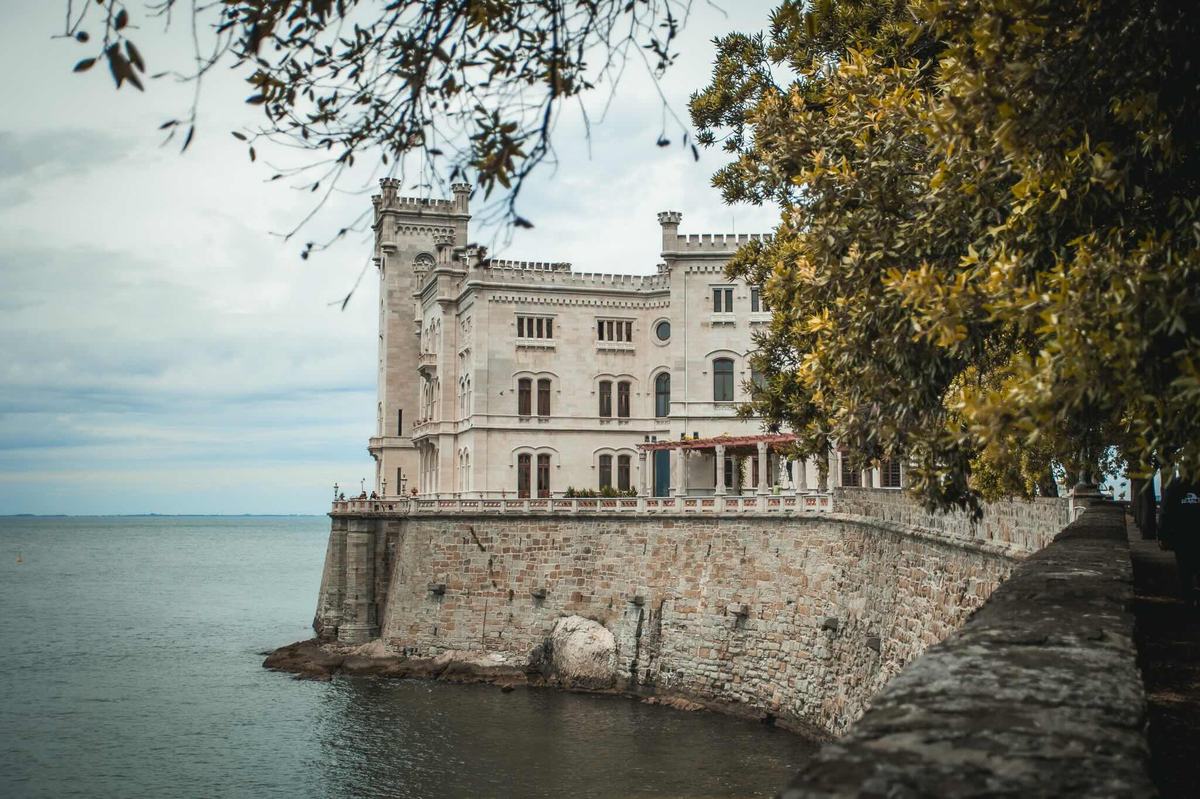
Arriving in Trieste by cruise has a rare advantage: you disembark practically in the city center. From the cruise terminal, it takes just a few minutes on foot to reach Piazza Unità d’Italia, the sea, the historic cafés, and many of the city's main cultural sites. For those traveling in a wheelchair, both manual and electric, this makes Trieste one of the most convenient stops in the Adriatic to explore in a few hours.
In most cases, between disembarkation and embarkation, the actual time available for the visit is about 5–7 hours. Our advice is to plan a relaxed itinerary, without overloading the day: Trieste is a city that is best enjoyed slowly, often stopping to look at the sea or to have a coffee.
The historic center has some areas with uneven pavements and slight slopes, but many of the main areas by the sea are flat and easily accessible by wheelchair. Here are 2 ideal itineraries for a day, fully described here on the Friuli Venezia Giulia for Everyone portal - including the "practical" stops (ATMs and refreshment breaks, with bars, typical trattorias, and restaurants).
Itinerary 1: The historic center between sea, squares, and historic cafes
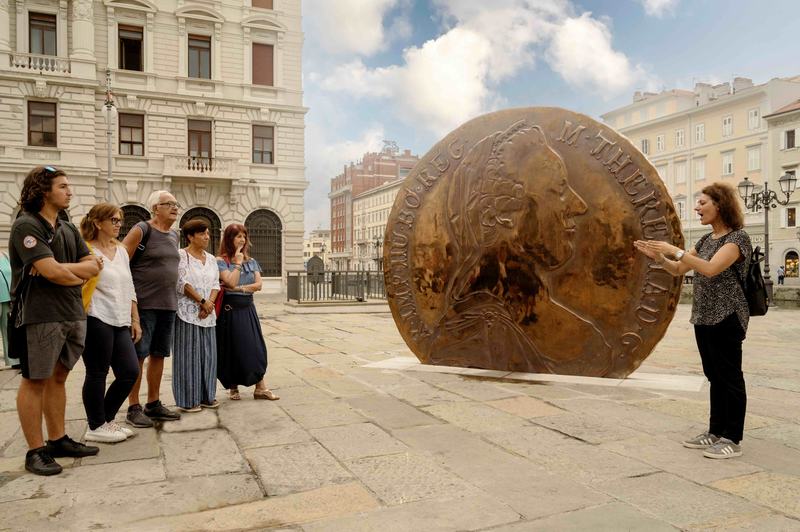
For a first visit, the easiest and most scenic itinerary is the one that crosses the monumental heart of the city.
The visit naturally begins at Piazza Unità d'Italia, one of the largest seaside squares in Europe. Here you can see the Town Hall, the historic buildings from the Austro-Hungarian era, and you will find a panorama that changes continuously with the light of day.
From this point, you enter the Cavana district, the oldest part of the city, made up of narrow alleys, small shops, and ancient stone pavements. Today it is one of the liveliest areas of Trieste, but it still retains the atmosphere of the old city port. Perfect for an aperitif break!
The route also crosses Piazza Cavana and the area of Via delle Mura, where traces of the medieval city survive.
A little further on, you reach one of the most interesting archaeological sites in the center: the Roman Theatre of Trieste, built between the 1st and 2nd centuries AD at the foot of the hill of San Giusto. Even today, the theatre suddenly emerges among the modern buildings, creating one of the most unique contrasts in the city.
From here, the path continues towards the Teresian Quarter, the district desired by Maria Theresa of Austria in the eighteenth century to transform Trieste into the great port of the Habsburg Empire.
You pass through Piazza Sant'Antonio Nuovo, dominated by the neoclassical church of Sant’Antonio Taumaturgo, and then towards the Canal Grande di Trieste, probably one of the most recognizable images of the city.
Here you can also find the Serbian Orthodox Church of San Spiridione, with its blue domes, and the historic cafés frequented by writers like James Joyce and Italo Svevo - obviously the right place for one last coffee before boarding the ship!
This itinerary is particularly suitable for those who want to see a lot without straying too far from the port and without climbing to the higher part of the city, which has significant elevation changes, and to admire emblematic places from a historical, architectural point of view, and... breathe in the culture of the city.
All the information on accessibility
Prepare your visit with the itinerary of the historic center of Trieste: the entire accessible itinerary is described, with detailed information and photographs of the pavement, slopes, accessible services, and viewpoints.
Itinerary 2: Miramare, the castle by the sea
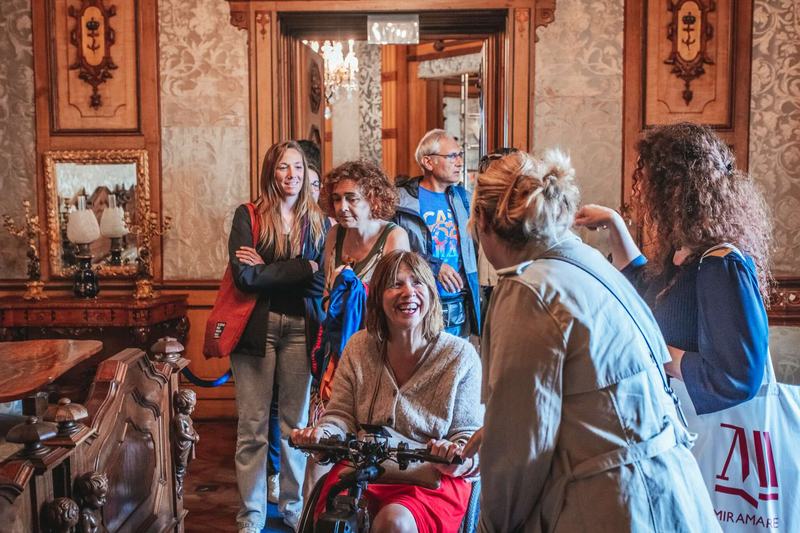
For those looking for a relaxing and scenic hike, the Castle of Miramare is one of the most enchanting destinations near the port of Trieste: a white castle overlooking the gulf, set in a large historical park between the sea and Mediterranean vegetation.
The cruise terminal is about eight kilometers away. The most convenient way to reach it is to book an accessible taxi or a NCC with a platform, depending on the need, specifying at the time of booking whether a manual or electric wheelchair is used. In this case, the taxi can drop you off near the entrance of the Castle, avoiding a climb that can be difficult for some. Alternatively, you can arrive with a beautiful flat walk along the sea to the train station area, where with the urban line 6 or 36 you can reach Miramare. The vehicles are equipped with a platform, but in this case, you have to face a climb to activate from the level of the bus stop to the entrance of the castle.
Built between 1856 and 1860 for Archduke Maximilian of Habsburg and Charlotte of Belgium, Miramare still retains an elegant and suspended atmosphere, between a romantic garden and a marine landscape.
The accessible visit starts from the park, with a long shaded walk along the Viale dei Lecci, among historic trees, benches, glimpses of the gulf, and rest points. Approaching the castle, the path becomes even more scenic: the terrace overlooking the sea allows you to walk among loggias, pergolas, and views of the coast.
The ground floor of the castle is accessible via a ramp; for the first floor, a small-sized elevator is available. The exact measurements are indicated in the accessible itinerary linked at the bottom of the article.
The route can continue towards the Castelletto, the historic greenhouses, and the Swan Lake. Some sections have gravel or slight slopes, but the main itinerary has been mapped in detail to help people with reduced mobility assess the route in advance.
In the park, there is a café for a light break. Before returning to the port, one can also enjoy a coffee in Piazza Unità d’Italia, just a few minutes from the cruise terminal.
All the information on accessibility
Prepare your visit with the complete Miramare itinerary including all the information and photos of each stop, and the park itinerary. The entire accessible park itinerary is available, with detailed information and photographs of the pavement, slopes, accessible services, and viewpoints.
How to reach Miramare: costs, transport, and benefits
Reaching Miramare Castle from the cruise terminal is quite simple for those traveling in a wheelchair.
The accessible taxi or NCC with a platform is the most convenient and fastest option. The ride from the port to Miramare normally takes about 20–25 minutes and the average cost generally varies between 20 and 30 euros each way, depending on traffic, and it is the same cost as a non-accessible taxi, calculated with the regular meter. It is not possible to book the taxi, but the companies listed below ensure the service (however, it is always better to calculate a little in advance the return time). For people using an electric wheelchair, it is advisable to specify this at the time of booking.
Among the useful contacts:
- Radiotaxi Trieste: +39 040 307730
- Radio Taxi Alabarda: +39 040 390039
Both services have some vehicles equipped with ramps, but availability is not always immediate during cruise arrival days.
Those who prefer to use public transport can reach Miramare by bus from the train station area. Many urban buses in Trieste are equipped with a ramp and the cost of an urban ticket is about 1.50 euros for a single ride. The journey takes an average of 25–35 minutes.
As for the castle, the external park is free to visit. Entrance to the castle museum, on the other hand, requires a paid ticket, generally around 10–15 euros for the full price, depending on temporary exhibitions or seasonality.
People with disabilities have the right to free entry to the Miramare Castle museum. In most cases, the accompanying person also enters for free if the documentation indicates the need for continuous assistance.
To obtain the exemption, it is usually sufficient to present:
- European Disability Card or equivalent certification
- disability certificate
- document certifying the right to assistance, if present
The ticket office staff is used to handling requests, including international ones, especially during the cruise season.

