MAP
MAP
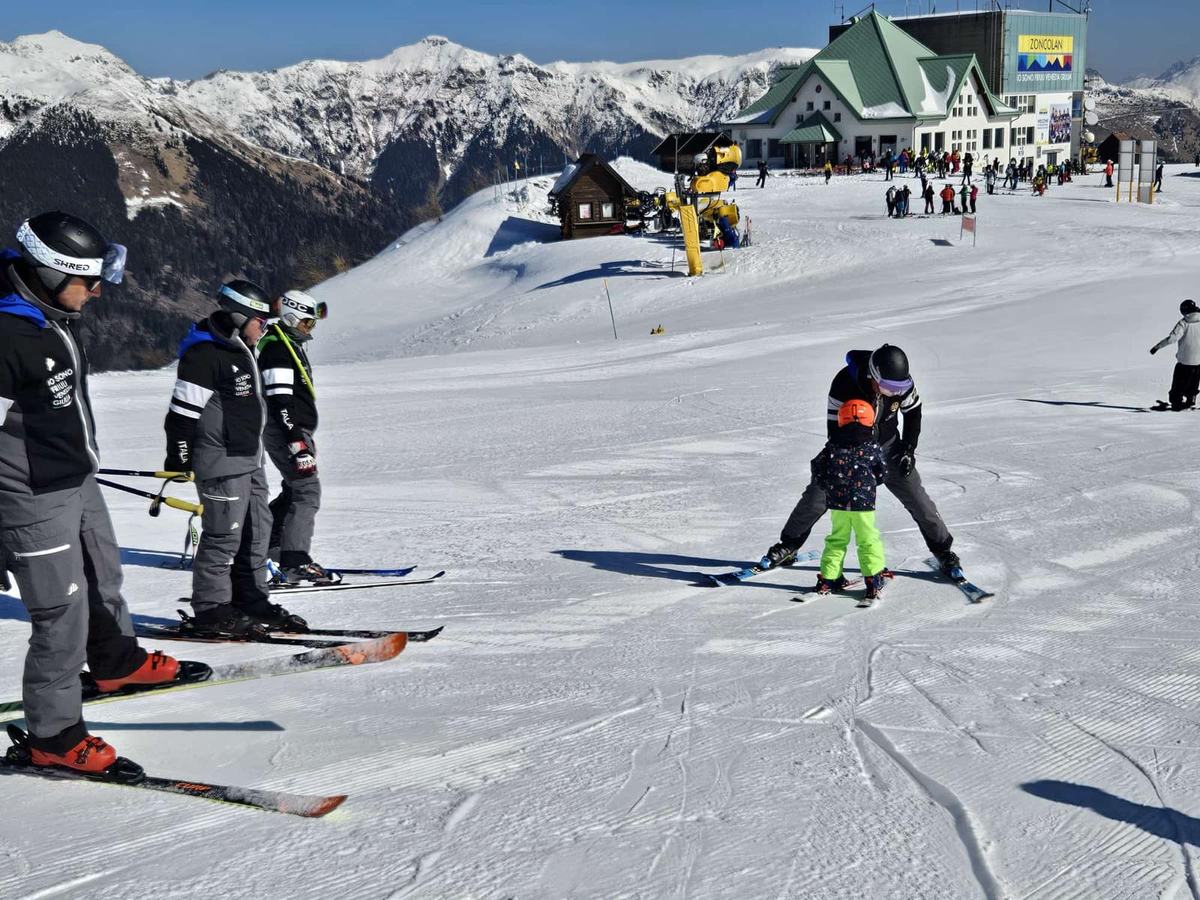
On the ski slopes, to guide a blind person, the voice is a continuous reference.
"Pa pa pa pa pa."
A repeated sound while going down the slope. The person behind does not follow a visual track, but the direction of the teacher's voice. And if that voice stops, the reference also stops.
“After fifty meters I felt the heat,” recounts a ski instructor, reflecting on the exercises carried out during the recent regional specialization course for teaching skiing to people with disabilities promoted by PromoTurismoFVG.
It is one of the images that best tells the story of the work that Friuli Venezia Giulia has been carrying out in recent years on the front of accessible skiing and, more generally, accessibility in the mountains: a work made of training, experimentation, equipment, collaboration between entities and associations, but above all of people willing to get involved.
A training born within a broader project
The aforementioned specialization course does not arise as an isolated initiative, but within a broader regional project dedicated to mountain accessibility.
In recent months, PromoTurismoFVG has indeed launched “I AM FVG – Inclusion and accessibility for mountains easy to live and enjoy”, a project dedicated to the development of accessible tourism in the mountainous areas of Friuli Venezia Giulia and funded through the Unique Fund for the Inclusion of Persons with Disabilities of the Ministry for Disabilities.
The project involves 84 mountain municipalities of the region and includes accessibility mappings carried out in collaboration with CRIBA FVG, purchase of inclusive equipment, updating the FVG for Everyone portal, and training courses aimed at tourism and sports operators.
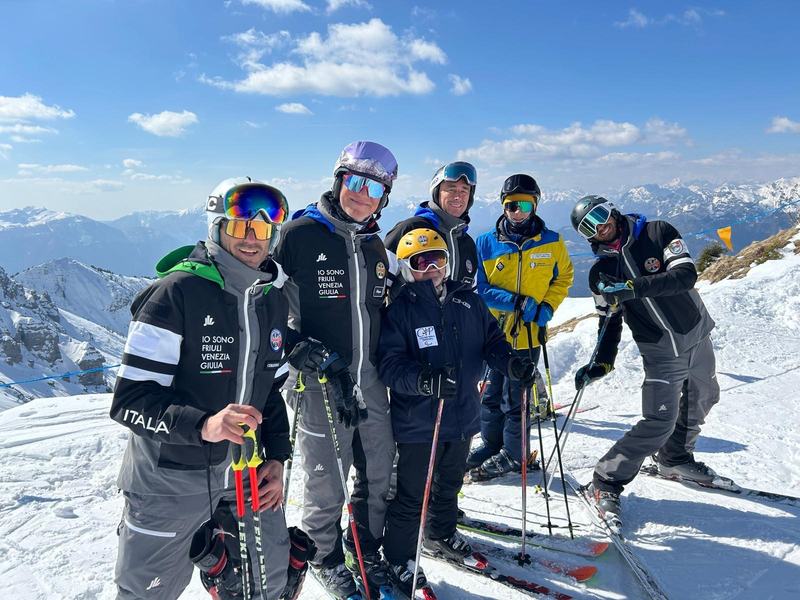
Among the activities launched is also the specialization course for ski instructors dedicated to teaching and accompanying people with disabilities, organized by the Regional College of Ski Instructors of Friuli Venezia Giulia together with AMSI FVG and PromoTurismoFVG.
According to the data provided by the regional college, the teachers registered in the regional register of Friuli Venezia Giulia for the 2025/2026 season are a total of 677. Of these, 85 currently have a specialization in teaching and supporting people with disabilities: 53 trained in previous courses and 32 specialized in the latest edition of the course: a percentage among the highest in Italy.
A sensitivity built over time
For Alessandro Pandolfo, regional president of AMSI Friuli Venezia Giulia — the Italian Ski Instructors Association — the sensitivity towards adapted skiing in the region does not start today.
Ski instructor since the nineties, Pandolfo has been following the training of instructors in the area for years and is now also national vice president of AMSI. Throughout his career, he has worked with different generations of instructors and collaborated on projects dedicated to accessibility in winter sports.
"Already in the 1980s there were teachers who had specialized in this field," he recounts.
Over time, some athletes have reached the Paralympics, while several ski schools have continued to pass on skills and collaborate with associations and sports organizations in the area.
“In general, this specialization arises mainly from a passion. It is not a sector where one makes money,” explains Pandolfo. “But over the years, the situation has changed: today there are many more people with disabilities who wish to approach skiing.”
The starting point, according to Pandolof, is almost always personal: “it mainly concerns sensitivities that everyone finds in the course of their own life, meeting loved ones who have had injuries or live with a disability.”
A course that cannot be just theoretical
For Pandolfo, training on teaching skiing to people with disabilities cannot be limited to a theoretical or demonstrative part.
"Taking a course pretending to be disabled becomes a farce," he says very clearly.
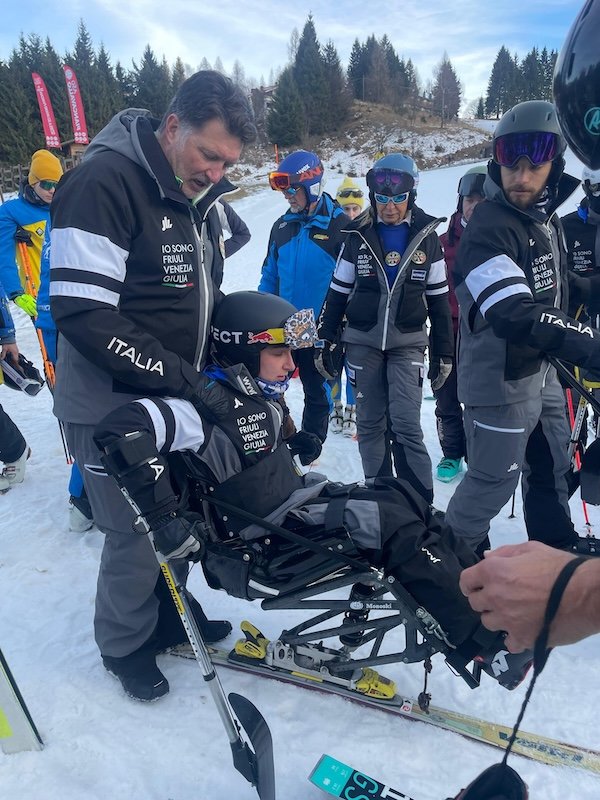
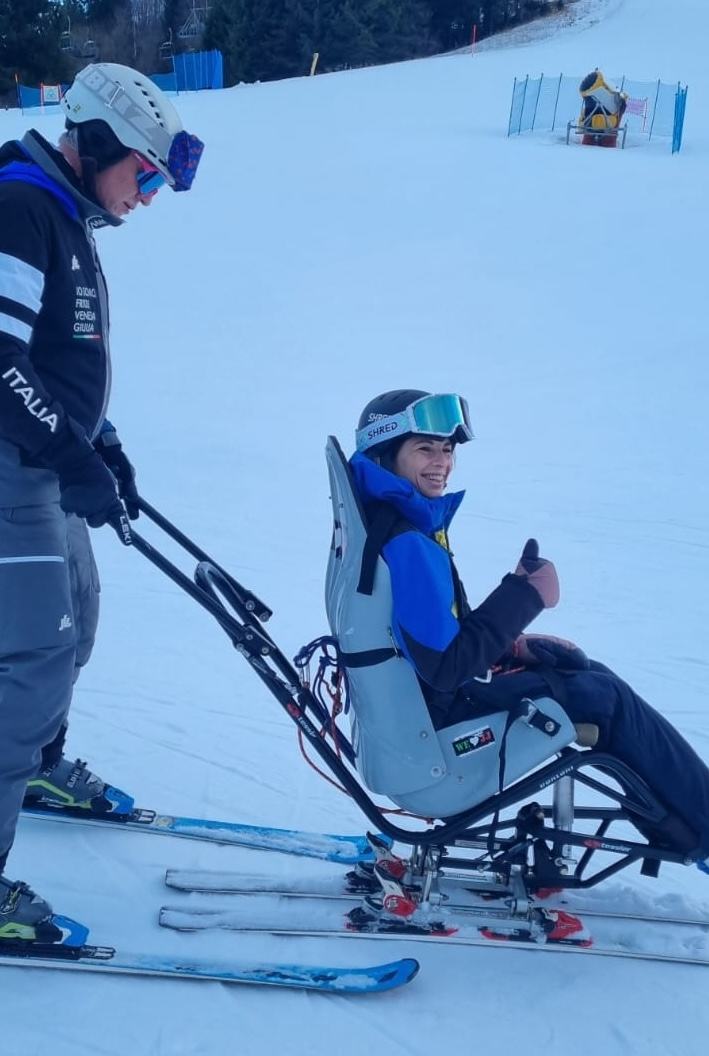
For this reason, the course organized in recent months has directly involved people with different types of physical, sensory, and relational disabilities, along with rehabilitation professionals, psychologists, orthopedic technicians, and specialized teachers.
During the training, very different situations were addressed: amputations, spinal injuries, visual disabilities, Down syndrome, intellectual and relational disabilities.
"We didn't want to limit ourselves to a superficial representation," he adds.
For Pandolfo, one of the most important aspects was also the comparison between different generations of teachers.
“The most beautiful thing was seeing young newly qualified instructors working alongside trainers with decades of experience,” he recounts. “Very different people from each other, but all truly motivated.” The biggest risk is approaching disability as a simple “additional module” of ski training.
"It takes time, practice, and real comparison. A theoretical lesson is not enough."
Learning to read very different situations
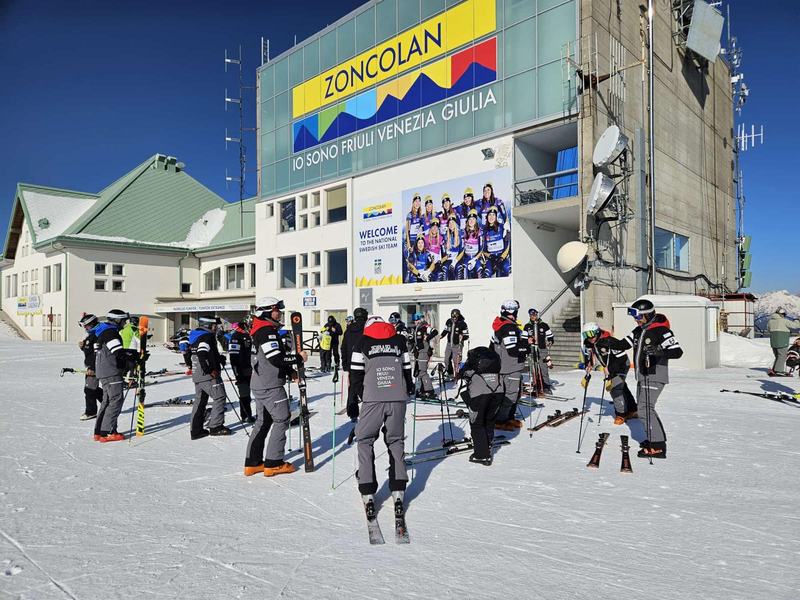
One of the aspects that emerged most clearly during the course is how needs change depending on the type of disability.
In the case of visual impairment, for example, the work of the instructor becomes a continuous exercise in concentration. "The blind person follows the direction of sound, so while skiing you have to talk continuously," tells us a ski instructor.
With a visually impaired skier, it is also possible to use an intercom or a minimal visual reference. With a totally blind person, however, the voice becomes the only possible orientation.
Over the years, according to Pandolfo, the type of request that comes to ski schools has also changed.
“In the past, requests mainly concerned motor disabilities,” he recounts. “Today, the needs related to intellectual and relational disabilities are growing significantly.”
And this requires teachers to have skills that go well beyond traditional skiing techniques. It is observed that even the profile of the teachers who choose this type of training is changing.
"In the course, we also had psychologists, graduates in motor sciences, and people with very different professional backgrounds," he recounts.
According to him, working in adapted skiing today requires increasingly cross-disciplinary skills that go beyond traditional skiing techniques and involve communication, relationship, and the ability to adapt to the needs of different people.
Schools and the growing demand
An important part of the demand comes today from school tourism, because many requests that arrive at PromoTurismoFVG concern classes with students with disabilities. Out of four or five schools that write, two or three have a person with disabilities among the students.
The requests concern not only the accessibility of hotels or museums, but also the presence of trained guides and instructors.
Pandolfo confirms that more and more often ski schools find themselves working with very heterogeneous groups, where the ability to adapt approach, communication, and teaching methods becomes essential.
It is one of the aspects that are transforming accessible tourism from a specialized niche to an increasingly cross-cutting theme in ordinary tourist services.
The mountain as a laboratory
"Many still think that skiing is impossible for a person with a disability," says Pandolfo. "In reality, it is not."
According to him, Friuli Venezia Giulia has some characteristics that favor this type of approach: smaller stations compared to the large alpine resorts, strong territorial collaboration, and availability of operators.
There are difficulties, but at the same time, the concrete availability of the facility staff also emerges.
"There is always the utmost availability to overcome the obstacle and allow the use of the facility."
For him, the mountain can also become an important place for experimentation for the entire accessible tourism sector.
"When you work with disability, you understand that the limits are often more cultural than technical," he observes.
Beyond technique
Among the strongest memories that participants take away from the training is the level of involvement of people with disabilities who participated in the activities.
“If they come there, they give it their all,” says another participant.
For those who teach, he says, this completely changes the relationship with the student.
“When you see that what you do is truly appreciated, you feel even more like giving your hundred percent.”
Even among the instructors, the atmosphere was unique. Young newly trained instructors and masters with decades of experience worked together during the course, sharing doubts, fears, and techniques.
“The energy was right,” recalls Pandolfo. “Motivated people, not forced.”
Working in adaptive skiing means first of all changing perspective: “to become a teacher you have to throw your heart over the obstacle,” he says.
And perhaps this is precisely the thread that runs through this entire regional experience: not the pursuit of theoretical perfection, but the patient construction of skills, tools, and relationships.
"The most important thing you learn working with disability," concludes Pandolfo, "is that we often set the limits ourselves."