 MAP
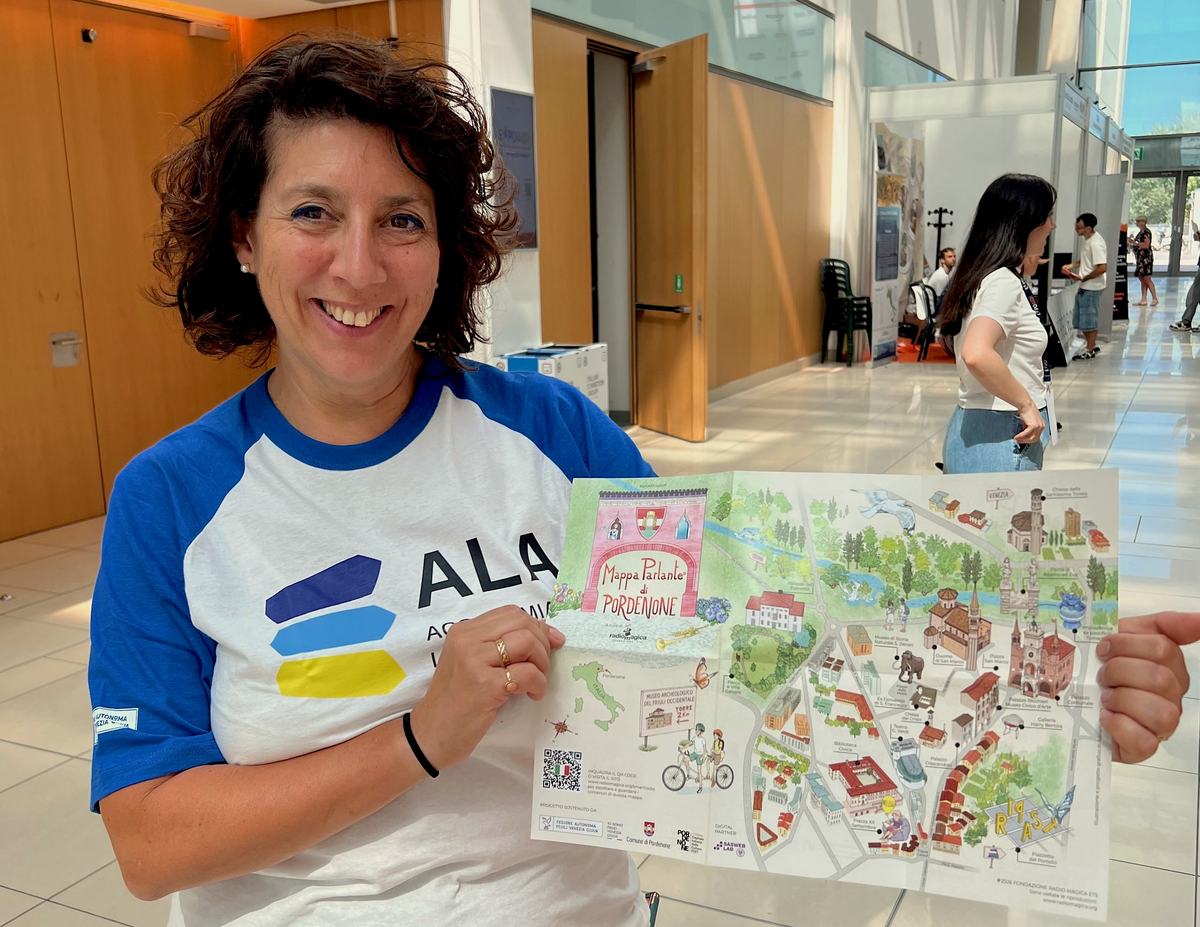
From stories to listen to at home, to "Talking Maps" to use during a visit, the Radio Magica ETS Foundation tells the story of cultural heritage through audio, video, Italian Sign Language and symbols of Augmentative and Alternative Communication. We met the founder and Secretary General, Elena Rocco, to learn how these stories come about, who chooses what to tell, and what listeners can take away from them.
The Origins of Radio Magica
Where did Radio Magica originate?
Elena Rocco: “We began as a research project at Ca’ Foscari University of Venice. I’ve been there since its founding, back in 2009, when podcasts were still a distant, far-off thing.
I had a five-year-old child who, given his disability, I knew would never read: he doesn’t recognize letters and can’t put them together to form words. Listening would have been an important channel for him. And helping children listen could also help extend their attention spans and improve their concentration. I thought to myself: why not give it a try?»
Research into web radio for children led to the founding of the Radio Magica Foundation in 2012. Listening is the starting point for work that now involves schools, libraries, museums and other local organizations. In 2021, Journeying with Radio Magica won first prize in the Global Junior Challenge, named in honor of Tullio De Mauro and dedicated to innovation and inclusion projects for schools.
One story, different ways to follow it
What does Radio Magica do today?
Elena Rocco: “At Radio Magica, we do lots of things, but in particular we create and share content in audio format, clearly with podcasts, but also in Italian Sign Language and with symbols from Augmentative and Alternative Communication. In short, we share beautiful stories in every language and form of communication possible, because we all have the right to stories.”
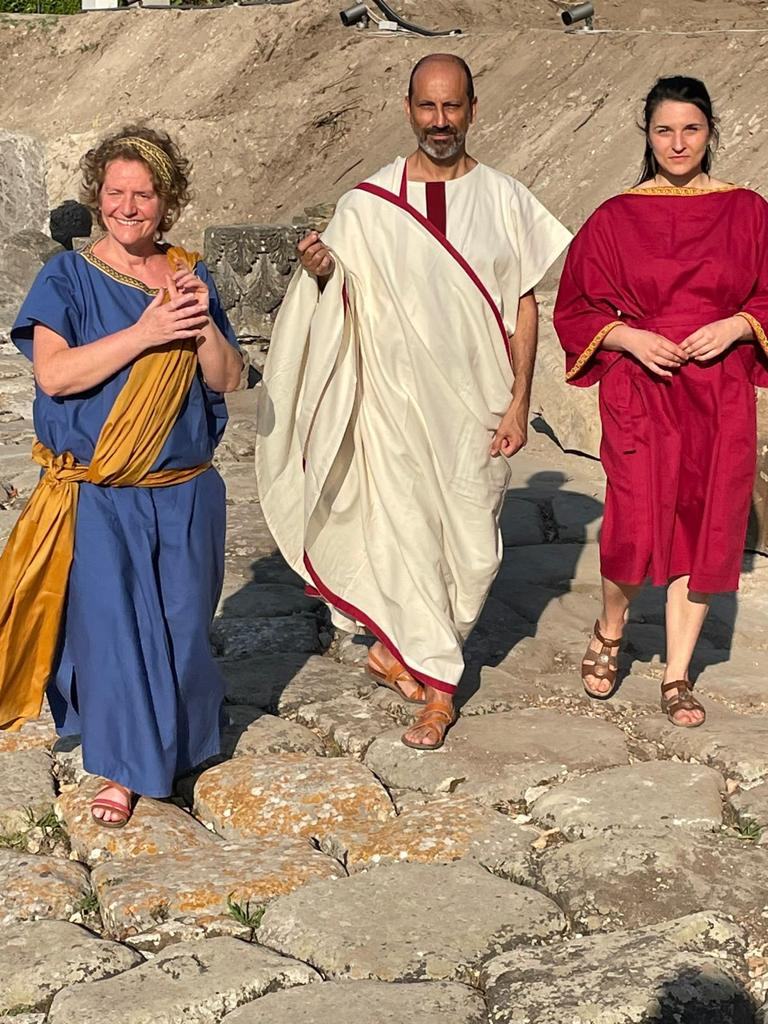
On the Foundation’s website, families and teachers can find podcasts, audiobooks and video books free of charge. The materials include videos in Italian Sign Language (LIS) and stories using Augmentative and Alternative Communication (AAC) symbols, which pair symbols with words to make them easier to understand. In schools, radio becomes a teaching tool. The workshops engage children and teenagers and complement local experiences, such as the dramatized tours of Aquileia LAB.
The Talking Maps, from Aquileia to other areas
How are Talking Maps created?
Elena Rocco: “After about six years of working with Italian publishing houses, which generously provided us with illustrated books, we decided to take a step forward and become a sort of publishing house ourselves, producing the Talking Maps. They are available in both print and digital formats.”
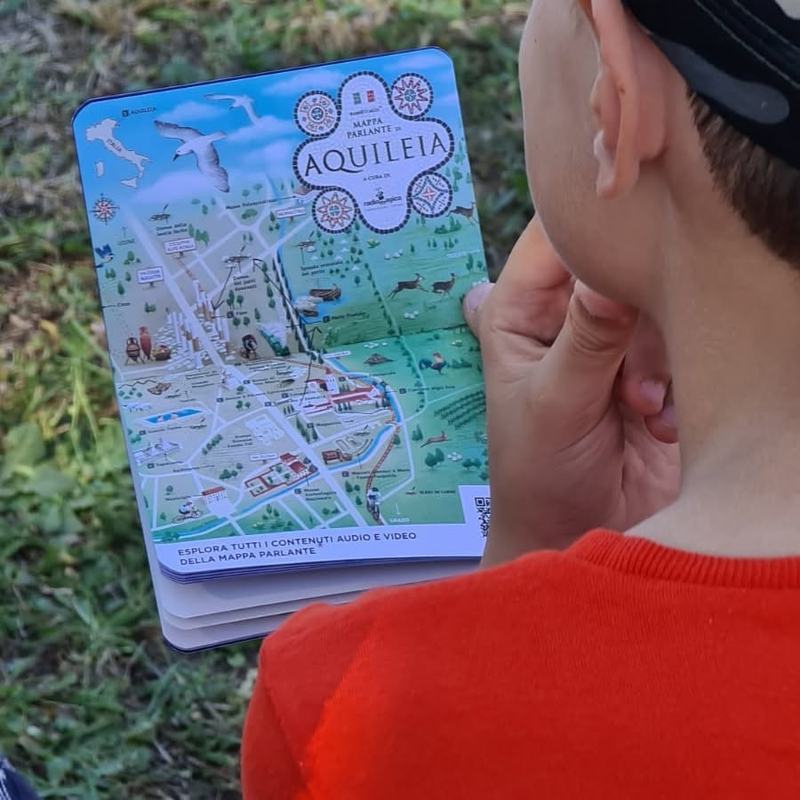
The first Talking Map is dedicated to Aquileia. On the illustrated map, QR codes link to stories, interesting facts and games connected to the locations. The online version can also be explored before your visit, so you can choose which stories to follow on site. The Aquileia map features 35 audio and video stories and includes content in Italian Sign Language.
Explore the Talking Map of Aquileia
The places and objects chosen by the community
Who decides what to tell?
Elena Rocco: “It’s a brainstorming session we hold through a survey in schools with children and young people, in libraries and with local organizations. We ask what their ‘objects of the heart’ are. So it’s a community map.”
The responses reveal the most frequently mentioned subjects and the most original suggestions. This is where the writing process begins, with authors and local heritage experts. In the case of Aquileia, discussions with the Aquileia Foundation and archaeologists helped transform the community’s suggestions into the map’s stories.
Accessibility begins with writing
How do you make texts accessible?
Elena Rocco: «Writing must be guided by accessibility guidelines, including linguistic accessibility: sentences should be simple, and words—as Tullio De Mauro taught us—should come from a vocabulary accessible to everyone. Sentences should not be long; we try to minimize the use of the passive voice, and we do not use metaphors.
They are heuristics, good practices, not rigid rules: they help ensure that everyone, including someone who may not know Italian very well, can listen with enjoyment.”
The choice of words and the construction of sentences come before recording. Depending on the project, the same story can become an audio recording, a video, a video in LIS, or be translated into other languages. In Aquileia, visitors wishing to learn more can also consult Discovering the River Port of Aquileia, a guide using AAC symbols created with contributions from Radio Magica and other partners.
After the visit, the memory of a story
What do you hope stays with those who listen?
Elena Rocco: “Our goal is always to write and tell an entertaining story, in a way that stirs an emotion that then helps you remember it. You may not remember the elements, the details, the year, the exact name, but you’ll remember the positive emotion you experienced, which will leave something memorable in your heart and memory. Then you’ll want to remember it and come back to see it again.”
Recent projects, from training to cultural participation
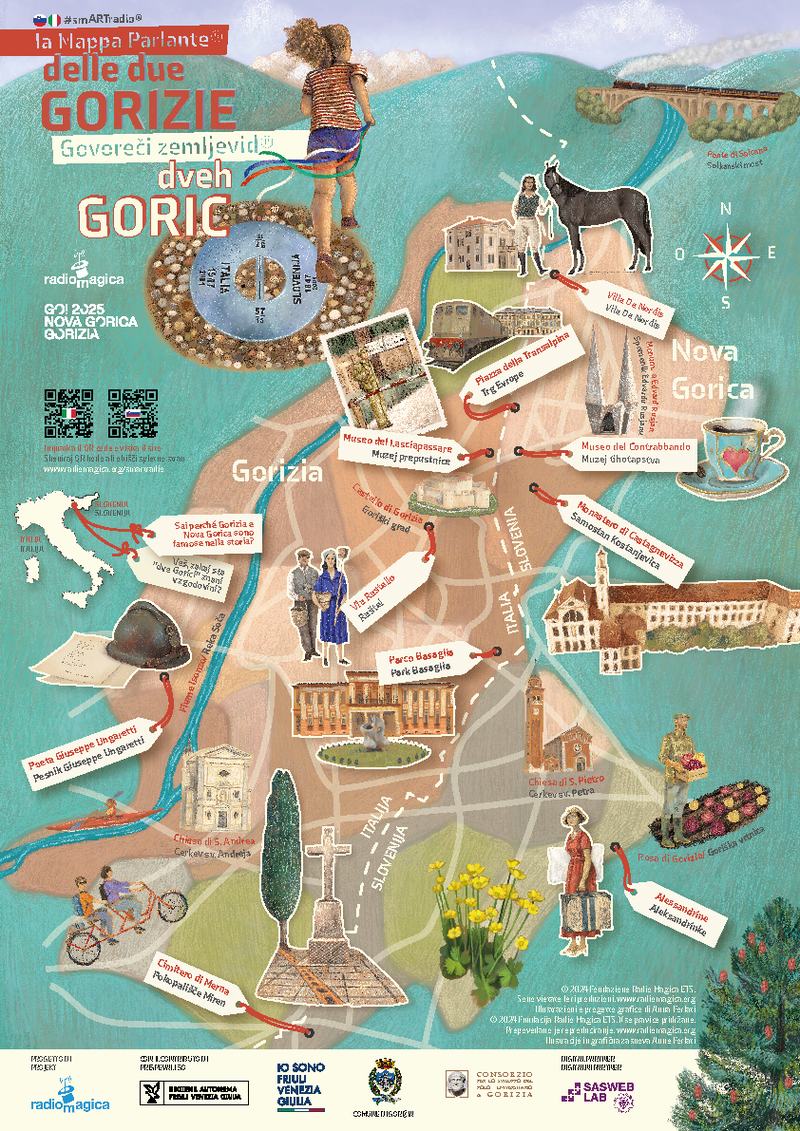
In Udine, the Foundation works with the University of Udine on the Academy of Free Abilities, a post-secondary program for young adults with cognitive disabilities. Presented in Rome in January 2026, the Academy offers classes, workshops, and educational visits to develop independence and practical and interpersonal skills.
The connection with the local heritage can be seen in Raggi di Vite, a project involving young people from Radio Magica Academy, cultural organizations and wineries in the Aquileia area. The participants helped design and produce mosaics and multimedia content. The works include the short film Lucerne, lucerne e ancora lucerne, created with the support of the National Archaeological Museum of Aquileia.
More information
Discover the association and find all the contact details on the page dedicated to Radio Magica, and discover the stories of the cities of Friuli Venezia Giulia with videos in Italian Sign Language.

