 MAP
MAP
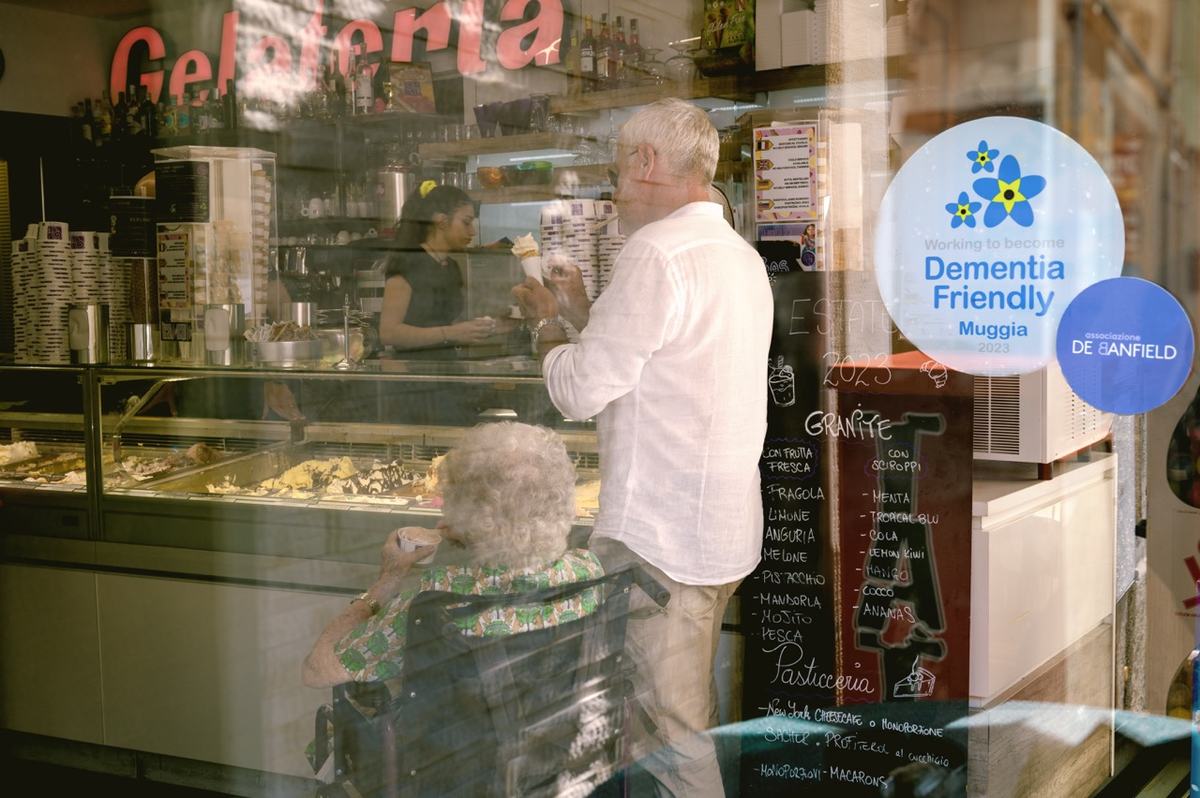
An inclusive destination is not only measured by ramps, elevators, or step-free paths. These elements are the first fundamental level to "open" a region, a city, a museum, and allow access for people with reduced mobility needs. But a destination is also measured by its ability to welcome a person who may feel disoriented, to support a family member who takes care of someone every day, to make a museum, a shop, a cinema, or a square more understandable, quieter, more livable.
It is on this ground that the Goffredo de Banfield ETS Associative Foundation works, founded in Trieste in 1988 to support fragile elderly people and their families. Since January 2026, after a long history as an association, de Banfield has become an Associative Foundation.
Telling us about it is Giovanna Pacco, General Director of the de Banfield Foundation. She has been working in the Trieste area since 2001 and has been its director since 2007; over the years she has followed the development of innovative services to support elderly people with disabilities, caregivers, and, in particular, families experiencing dementia.
“The goal is to keep the person in their home for as long as possible,” explains Giovanna Pacco. “All the interventions we have structured since 1988 are aimed at building support services for families, so that they can manage care in the best way in their own home.”
A central part of this work is CasaViola, inaugurated in 2016 in Trieste: the first house in Italy dedicated to support services for caregivers of people with dementia. Here, training courses, psychological support, activities for people with dementia, and respite moments for families take place.
“CasaViola is a very large apartment where we develop services to support caregivers,” says Pacco. “There are services dedicated only to caregivers, to protect their health; services that bring together the caregiver-dementia person couple, to facilitate communication; and services specifically dedicated to people with dementia, which also have a relief function for the caregiver.”
But the work of the Foundation does not stop within its own premises. One of the most important goals is to build more welcoming communities for elderly, fragile, or dementia-affected individuals.
“Our activity does not want to focus solely on the services provided at our locations,” emphasizes Pacco. “What we want is to be able to build a much more welcoming community for elderly, fragile, or dementia-affected individuals.”
This vision includes the work on the Dementia Friendly Community, the Friendly Communities for People with Dementia. Muggia was the first in Friuli Venezia Giulia to receive this recognition in 2020, after a project that started in 2017.
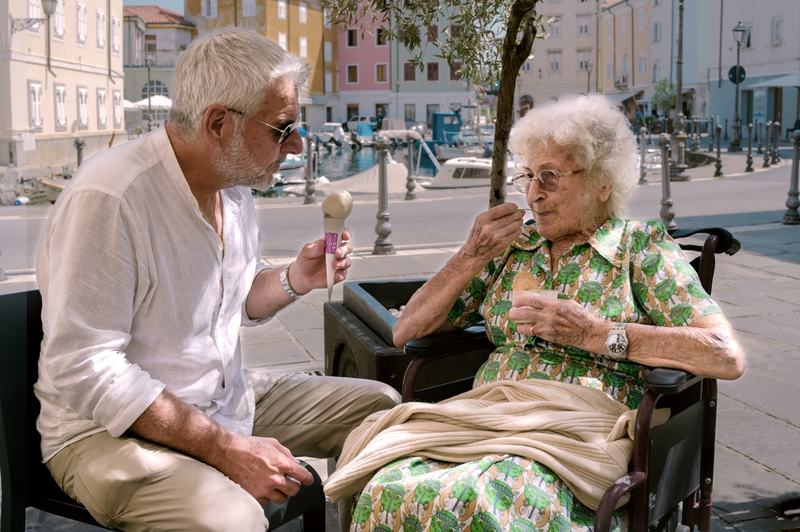
"The goal, which seems small but is actually very important, is to build inclusive communities for people with dementia," says Pacco. "Where a person with dementia feels good, any fragile elderly person or anyone in difficulty feels good."
In Muggia, the project involved the Municipality, ASUGI, the Foundation, local associations, caregivers, and numerous businesses. The staff of public offices, social services, local police, and commercial activities underwent training courses to learn how to recognize situations of difficulty, communicate more calmly, and activate the correct references when needed.
"We have worked with almost forty shops in Muggia," explains Pacco. "The shopkeepers have undergone training on how to interact with people with dementia. In small communities, you often see the same people and you notice if there are any changes. You also become a point of reporting if something is wrong."
The result is a network that improves the lives of residents, but can also become important for those who come to visit or on vacation. A family traveling with a person with dementia may feel safer in an area where there are trained places, prepared people, and recognizable references.
"The idea is to create paths, tourist itineraries suitable for people who want to go on vacation with their loved one with dementia, or simply with a fragile grandparent," says Pacco. "If you know what the reference places are, where you can go, what kind of hospitality you can find, you can create your ideal itineraries."
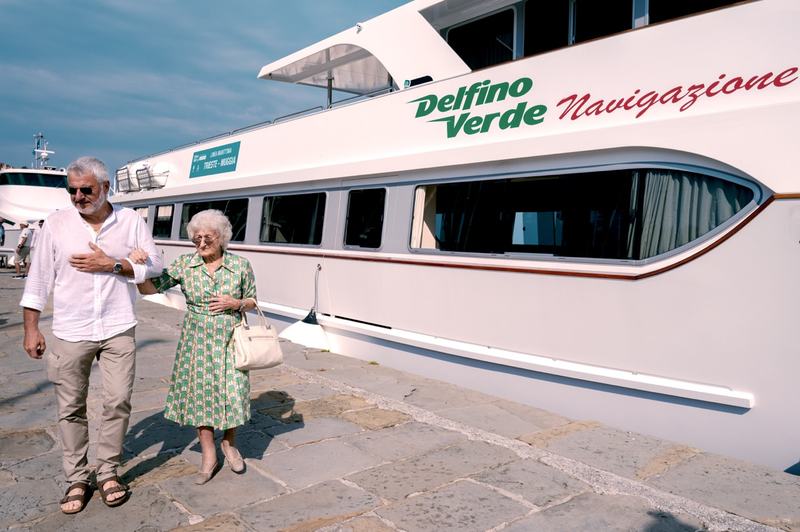
In this direction goes the collaboration with PromoTurismoFVG. After an initial experience related to the Muggia information desk, the training has been expanded to the regional Infopoints: 26 desks in Friuli Venezia Giulia have followed a path to become more prepared in welcoming people with dementia and their families. The staff of the Delfino Verde, the maritime service that connects Trieste, Muggia, and other locations in the Gulf, has also participated in the training.
Tourism, however, is not just about information and transportation. It is also about culture, leisure, relationships. For this reason, the Foundation is working hard on cognitive accessibility in museums. Among the places involved are the Carà Museum in Muggia, the Sea Museum in Trieste, the Botanical Garden, the Natural History Museum, ITS Arcademy – Fashion Museum, and the Carlo Schmidl Theatre Museum.
“We are working a lot on the cultural cognitive accessibility aspect,” explains Pacco. “When elderly people have fragility or cognitive decline, the museum must have a different path. It’s not just about avoiding architectural barriers, but also cognitive barriers.”
These barriers can be overly bright lights, mirrors, narrow spaces, disturbing videos, noises, or unclear paths. Sometimes simple adjustments are enough: dimming the lights, moving an element, proposing an alternative route, better marking an environment.
“As you signal a step, you can also indicate that there is a path not suitable for people with a cognitive disorder and suggest another route,” says Pacco. “This allows you to visit the city and go to the museums knowing that those museums have paths suitable for people with vulnerabilities. It’s good for citizens, but it’s also good for tourists.”
Another significant experience is that of the Ariston Cinema in Trieste, indicated by Pacco as the first dementia friendly cinema in Italy. The screenings are designed with dimmed lights, lower audio, scheduled breaks, the possibility to stand up and move freely, and a final convivial moment.
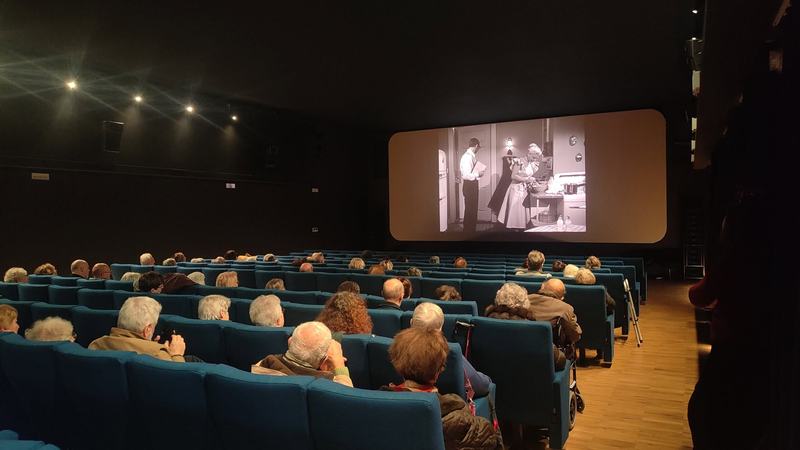
"You can comfortably bring your loved one, even if they speak loudly or get up," says Pacco. "It's perfectly fine." And he adds: "The beautiful thing is that these soft projections have attracted not only elderly people or those with fragility, but also mothers with children. It has become an intergenerational moment."
In the month of September, dedicated worldwide to Alzheimer’s, the Foundation also promotes widespread awareness initiatives in the area. Among these is “Add purple to the table,” which involves numerous venues in the province of Trieste with culinary proposals inspired by purple, the symbolic color of Alzheimer’s, accompanied by informational materials and useful references.
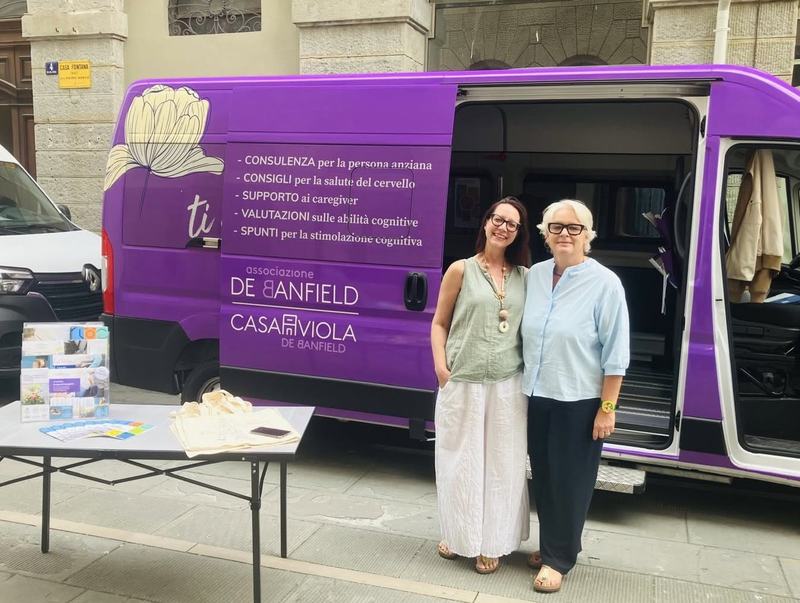
There is also the Purple Minibus, a real mobile unit with psychologists and social workers that brings counseling and information to the squares of the province of Trieste. “Instead of making people go to the service, we are the ones who go,” says Pacco.
The work of the de Banfield Foundation shows that accessibility is not just a technical feature of places, but a quality of communities. A destination is more welcoming when those who live in it and those who visit can rely on trained people, recognizable services, more understandable spaces, and a network capable of responding.
For families traveling with a person with dementia, this can make the difference between giving up a vacation and being able to imagine it. For the territories, it is an invitation to build more prepared, more inclusive, and kinder communities.
As Giovanna Pacco says, “they are small pieces to make the community kinder, more welcoming, more accessible.” And it is precisely from these pieces that a new way of living and visiting Friuli Venezia Giulia can emerge.

