 MAP
MAP
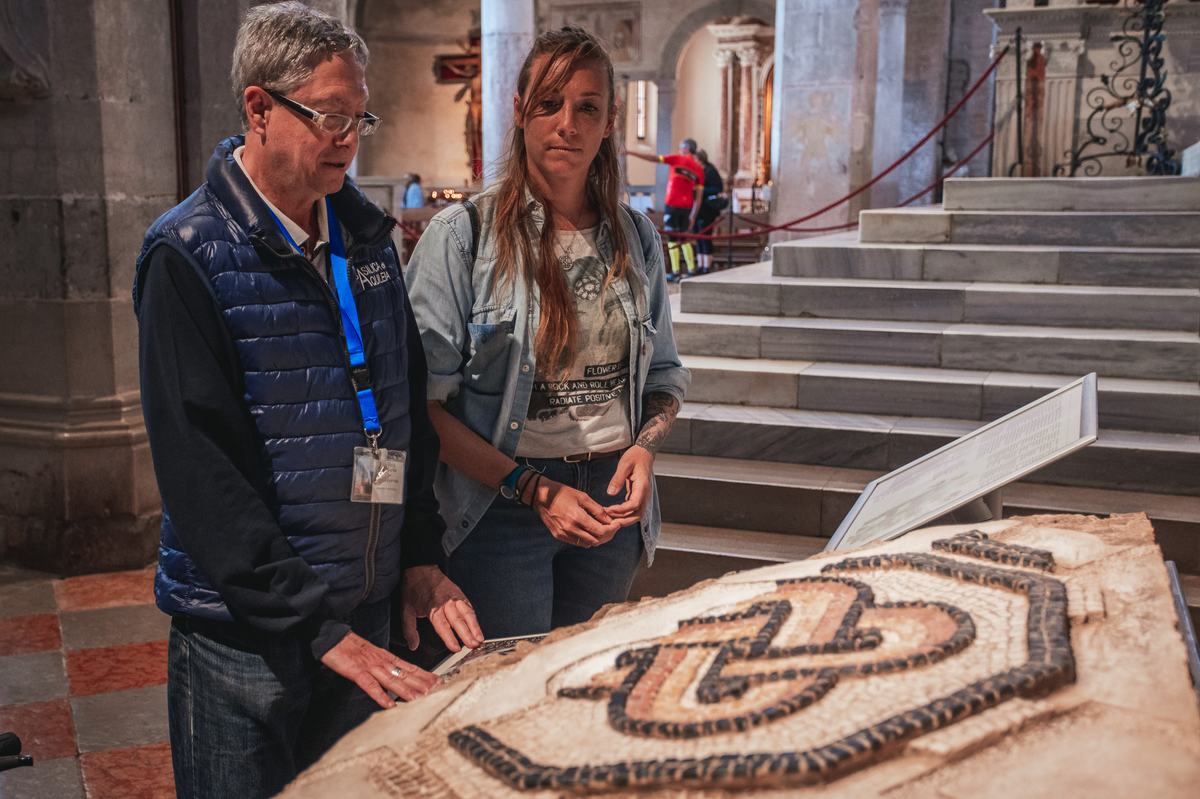
From the early Christian mosaics of Aquileia to the 19th-century residence of Miramare, this two-day itinerary brings together two important cultural sites in Friuli Venezia Giulia that have developed specific tools for the visit of blind and visually impaired people.
Three-dimensional models, tactile tables, artifacts to explore with hands, audio descriptions, and braille texts allow for the understanding of heritage through shapes, materials, voices, and stories. Some resources are always available; for guided tactile visits and educational activities, it is advisable to contact the facilities in advance.
First day: Aquileia, the ancient city to listen to and touch
Aquileia was one of the largest and wealthiest cities of the Roman Empire. Today, the archaeological area and the Patriarchal Basilica form a site recognized as a UNESCO World Heritage Site.
The Basilica and its mosaics
The visit can start from the Patriarchal Basilica, famous for its large early Christian mosaic floor.
The Basilica for everyone project was born about four years ago with an initial focus on people with visual disabilities, and then gradually expanded to other accessibility needs.
"For us, accessibility is a fundamental value because the Basilica is a place of worship, where masses are celebrated and prayer is experienced. It is a place of faith and, precisely because of its nature, it cannot be inaccessible to some people," explains Anna Maria Viganò of the Foundation Society for the Conservation of the Basilica of Aquileia.
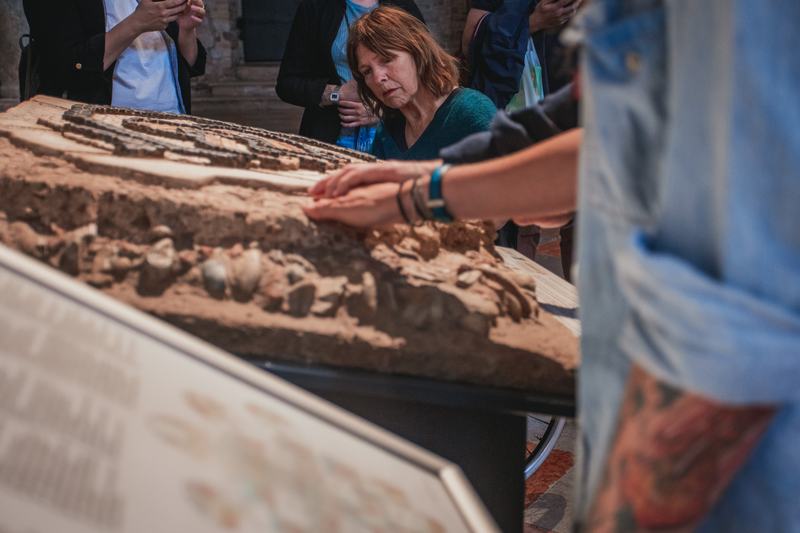
The main tactile tool is the Solomon's Knot tiflodidactic panel, an enlarged reproduction of one of the most recognizable symbols of the mosaic floor. The panel was created by the Mosaicists Group of Ravenna using the techniques of ancient Roman mosaicists.
The reproduction is stratigraphic: by exploring it with the hands, one can recognize not only the design and the tiles but also the different layers present beneath the surface of the mosaic. The panel also allows for understanding the shapes and color variations through differences perceptible to the touch. In the Basilica, there are volunteers, local people, trained specifically to allow those who do the tactile exploration of the Knot to learn the techniques, understand the different layers, and then the "finished product."
In the Basilica are available:
- a "removable" three-dimensional model, entirely made of wood, that represents the layout, volumes, and internal organization of the building;
- tactile tables made with the PIAF technique, which translate some mosaics into raised drawings;
- video guides with audio description dedicated to the Basilica and the main scenes of the mosaic floor;
- trained staff for welcoming blind and visually impaired people.
The tools were designed in collaboration with the Francesco Cavazza Institute for the Blind in Bologna, the Rittmeyer Regional Institute for the Blind in Trieste and the blind tiflologist Deborah Tramentozzi.
This shared work has produced interesting tools for people of different ages and backgrounds: the Solomon's Knot, in particular, is explored and used by a large part of the Basilica's audience.
The national archaeological museum
In the afternoon, you can continue to the National Archaeological Museum, where sculptures, inscriptions, mosaics, and everyday objects tell the story of life in the ancient Roman city.
In the reception area, there is a visual and tactile map of the entire museum complex. In the rooms, there is a tactile audio-described path with eleven stations.
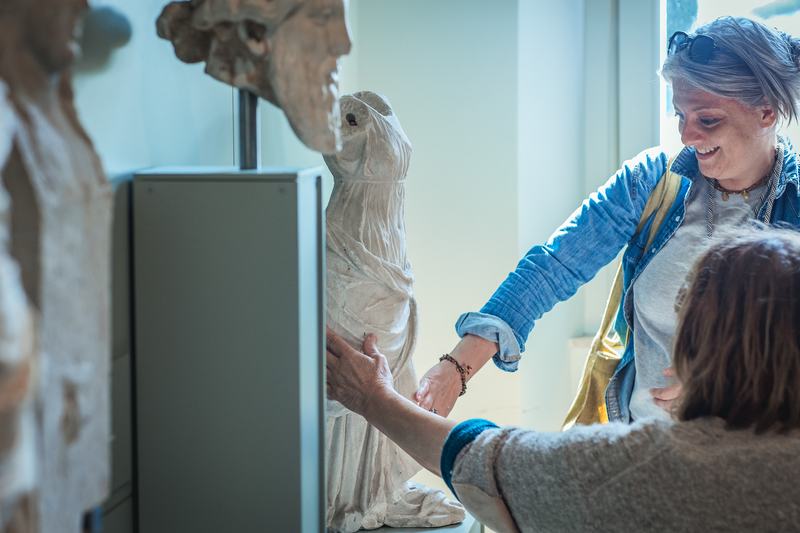
The tactile reproductions allow you to learn about very delicate artifacts or those placed in normally unreachable positions and to read specially enlarged details. Each station is accompanied by captions in braille, high-contrast characters, and pictograms. The most beautiful aspect of this museum is that, along with the reproductions, you can also explore some "real" pieces, which allow you to perceive the marble or stone.
The audio descriptions, available in Italian and English, are activated automatically through beacons installed in the rooms, accompanying orientation, tactile exploration, and understanding of the artifacts.
To follow the route, you can request the dedicated smartphone at the ticket office or download the app of the National Archaeological Museum of Aquileia on your device and select the "Tactile route" option.
Upon reservation, the educational service organizes guided tours, hands-on workshops, and tactile paths for individual visitors and groups.
The Talking Map of Aquileia
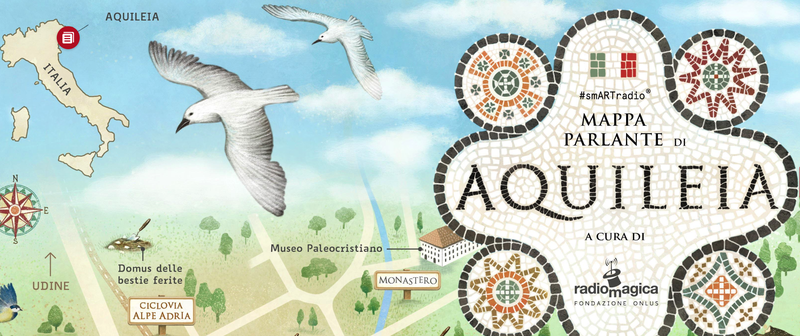
To prepare for the visit or accompany a walk among the monuments and archaeological areas, you can use the Talking Map of Aquileia, created by Fondazione Radio Magica ETS.
The map collects 35 audio and video contents dedicated to the history of Aquileia, its monuments, characters, and curiosities of the city. It includes stories, insights, and narratives designed to bring different audiences closer to the cultural heritage.
Radio Magica ETS Foundation, based at the University of Udine, develops accessible dissemination projects and promotes the right to listen. Its Talking Maps transform cities, museums, and territories into narrative paths accessible online.
Second day: the Castle and the Park of Miramare
From Aquileia, Miramare can be reached in about an hour by car. The Castle, built for Archduke Maximilian of Habsburg and Charlotte of Belgium, overlooks the Gulf of Trieste and is surrounded by a historic park of 22 hectares.
The Park through tactile maps
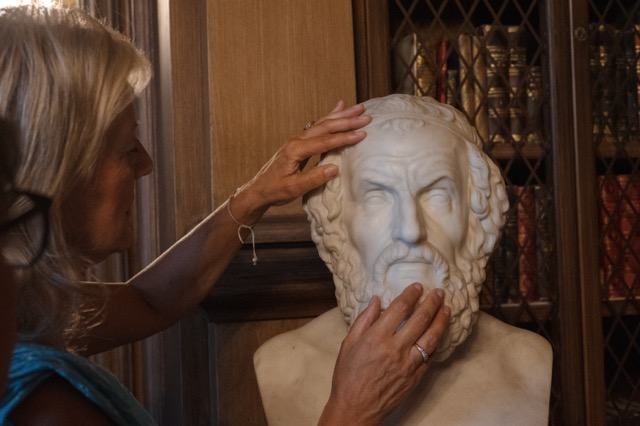
The route can start from the Porta della Bora, where a tactile map presents the general organization of the park, the main points of interest, and the location of the monumental trees.
Other visual-tactile panels are located:
- near the entrance of the Castle, with a simplified three-dimensional model of the complex, the buildings, and the terrain layout;
- near the cafeteria, with the relief map of the parterre, the fountains, the statues, and the hedges;
- in the area of the Castelletto and the ancient Serre;
- near the Serre Nuove and the Miralab, with contents dedicated to botanical species and monumental trees.
The panels feature texts in Italian, English, and braille, large characters and high contrast, relief maps, and three-dimensional reproductions. They are freely accessible during the park's opening hours.
Know the Castle through touch and voice
In the castle's atrium, you can request from the staff the three-dimensional model of the building, useful for understanding its shape, towers, and volumes before starting the tour of the rooms.
A day with the archdukes is also available, the first illustrated tactile guide of the Castle and the Park. Designed especially for children and young people, it tells the story of Miramare through raised images, texts in braille, and enlarged characters. The guide can be consulted upon request and used for shared readings and educational activities.
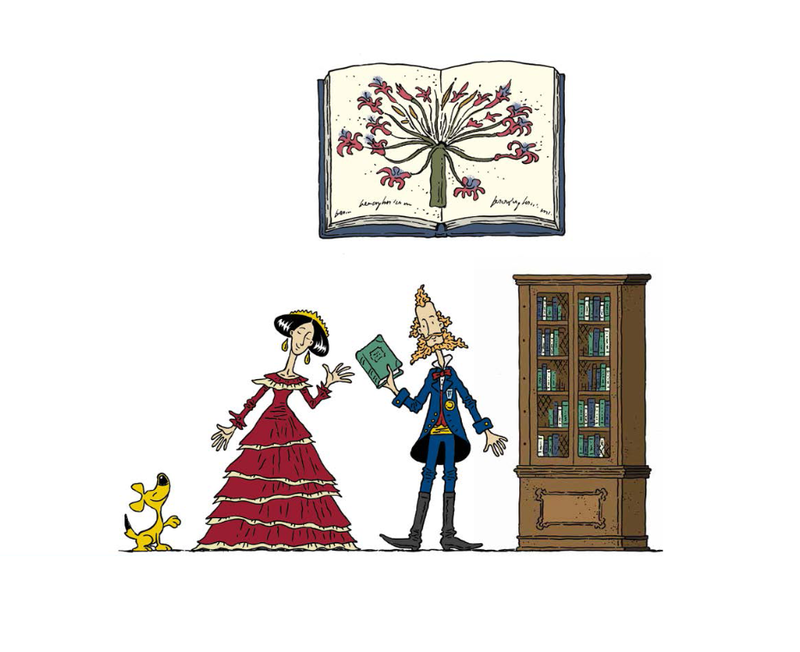
The story has been transformed into a free audiobook, available in Italian and English. The voices of Massimiliano and Carlotta guide the audience in discovering the residence and its park.
At the ticket office, there is also an audio guide with descriptions of the rooms and the history of the Castle. However, the device does not have a keyboard with tactile recognizable numbers: it may therefore be necessary to ask for assistance from staff or an escort to select the tracks.
Before leaving
It is advisable to check schedules, availability of supports, and any changes to the routes. To organize a guided tactile visit or an educational activity, you can contact the facilities directly.
- Basilica of Aquileia
Check the sheet on FVG for everyone
Tel. 0431 91067 - National Archaeological Museum of Aquileia
Check the sheet on FVG for everyone
Tel. 0431 91035 - Historical Museum and Miramare Castle Park
Check the sheet on FVG for everyone
Tel. 040 224143 - Talking Map of Aquileia – Radio Magica ETS Foundation
Listen to the guide of Aquileia - Basilica for everyone – Basilica of Aquileia
Visit the project website
Tel. 0431 91067

